Case study · Deviniti · 2024
Finding where to grow next in IT service management
I ran a 30-interview discovery study on my own in about 12 weeks to find where Deviniti's ITSM apps for Jira should grow next.
Some details are hidden or changed to respect an NDA.
The business question
Deviniti wanted to grow from single apps into a complete ITIL-aligned portfolio for Jira. Before committing a roadmap, the Head of Product and the ITSM product managers needed to know which problems in Change, Problem and Asset Management were worth solving.
I ran a strategy workshop with them to turn that into three research questions:
- What jobs do practitioners need to get done in each practice?
- Where are the biggest pain points and bottlenecks?
- Which capabilities would deliver the most value to them?
How I ran it
Recruiting this niche audience was slow and unpredictable, so I couldn't wait to fill all 30 slots before starting. I ran recruitment, interviews and tagging as one continuous loop instead of three phases.
Recruiting a hard-to-reach audience
approximately 300
people screened
30
in-depth interviews
5
existing customers among participants
The hardest part was finding the right people: ITSM specialists in companies with more than 500 employees. About 300 people went through screening to reach 30 interviews, and only 5–6 of them were existing customers.
- Manual sourcing. I searched LinkedIn by hand for people in roles like IT Change Manager, Problem Manager, Asset Manager, IT Operations Manager and DevOps Engineer. Many invitations went unanswered.
- Screening surveys in topic-specific ITSM groups, which I also had to find myself. Many applicants did not meet the criteria.
- Including competitors' users. Participants used Jira and competing ITSM tools, which showed where rivals fall short.
- A parallel pipeline. Because recruitment took so long, I couldn't recruit everyone first and interview later. I recruited, interviewed and tagged transcripts at the same time. A colleague handled participant incentives (vouchers).
Many participants held mixed roles, for example Change and Asset Management together. That overlap gave me insight into several practices per interview, so 30 interviews were enough to see clear patterns.
From 30 conversations to insights
Each interview mapped how participants run their Change, Problem and Asset Management workflows, the jobs they try to get done, and the gap between their tools and their ideal way of working.
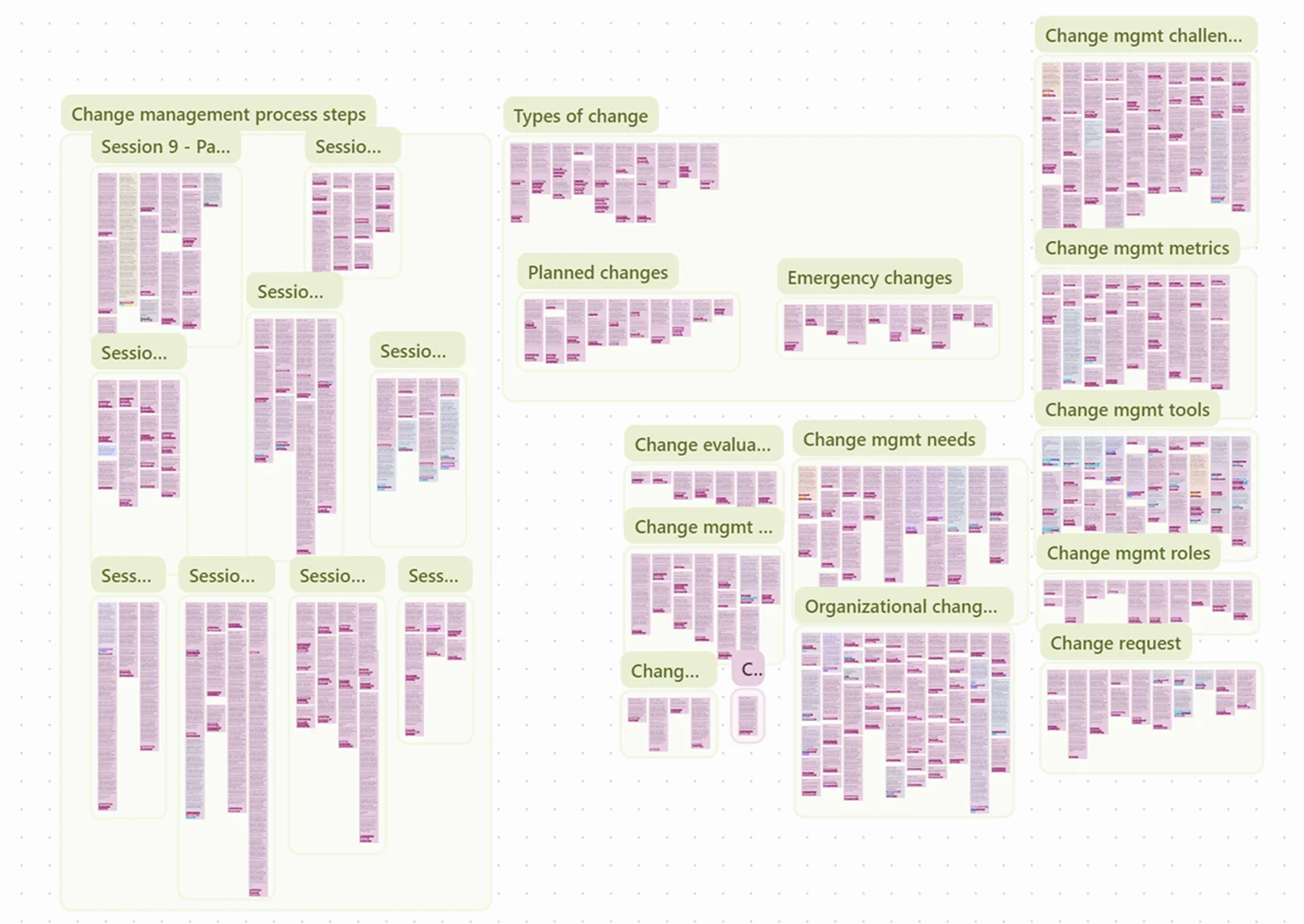
I tagged every transcript in Dovetail so each later recommendation could be traced to real quotes. I then clustered the highlights into themes and mapped user journeys to show where friction and frustration peak. The report framed each insight as observation, interpretation and recommendation, so stakeholders could act on it directly.
What we learned (generalised to respect the NDA):
-
Practitioners stitch processes together from many tools.
Running Change, Problem and Asset Management well meant juggling several apps at once.
-
They would rather have one larger solution than several small ones.
This directly supported the business goal of growing from single apps into a complete ITIL portfolio.
-
Competitors met more needs, but not all of them.
Rival tools covered more of participants' needs, yet participants named specific weaknesses in them. These gaps became openings for differentiation (details under NDA).
Turning insights into priorities
After the report, I ran a second workshop with stakeholders. Together we chose Change Management as the priority area because it had the biggest potential impact on customers. It was also the area participants most often described as needed but not good enough today.
I then worked with a PM to turn that area into a ranked set of opportunities. I mapped them in an Opportunity Solution Tree and scored them with RICE. Developers estimated the technical effort. To estimate Reach and Confidence, I also interviewed implementation partners: companies that deploy Jira and see the needs of many clients. I defined how to score value:
| Value | Criterion | Question it answers |
|---|---|---|
| User | Pain severity | How critical is the problem for the user? |
| User | Frequency | Daily or once a quarter? |
| User | Alternatives | Are there easy substitutes on the market? |
| Business | Impact on key metrics | Which KPI or North Star metric does it move? |
| Business | Acquisition | Will it attract new users? |
| Business | Retention | Will it keep current customers longer? |
| Business | Monetisation | Will customers pay for it, directly or indirectly? |
| Business | Strategic fit | Does it match the company's mission and product vision? |
A competitive analysis of rival ITSM tools showed where Deviniti could stand out.
What I handed over
The findings and the ranked opportunities went into the company's discovery programme. That programme gathered results from several studies, and a dedicated team built solutions from them. I left Deviniti soon after, so I can't report what shipped.
What the team received:
- A research report with insights framed as observation, interpretation and recommendation
- User journey maps and a library of pains and needs per ITIL practice
- An Opportunity Solution Tree and a RICE-ranked list of opportunities for Change Management
- A competitive analysis of rival ITSM tools
What I'd do differently
I would add a quantitative survey after the interviews. Thirty conversations showed what the problems are; a survey would have shown how widespread they are. Numbers would also have made the business case stronger for stakeholders.